

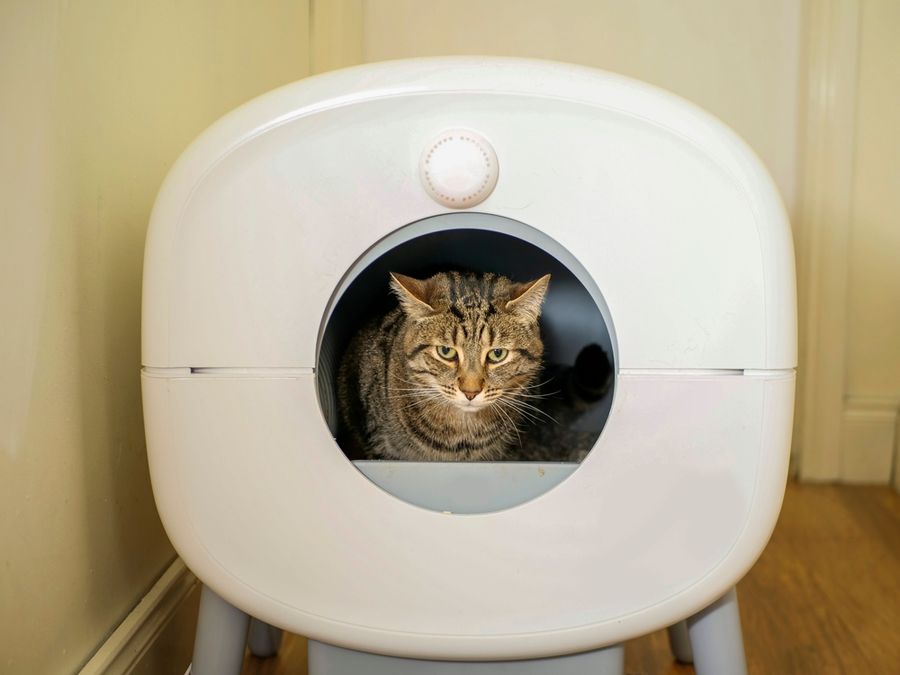
A self-cleaning litter box can remove one of the least pleasant parts of cat care, but it does not make litter duty disappear. Owners still need to add litter, empty the waste drawer, clean the unit, and help the cat adjust. Newer models now offer larger bins, open entries, odor controls, and app tracking, giving households more ways to reduce daily scooping and keep litter-box care easier to manage.
Litter-Robot 5 Pro: Best for Multi-Cat Monitoring
The Litter-Robot 5 Pro automatically sifts waste after each visit and can serve up to five cats weighing 3 to 30 pounds. Two built-in cameras support live viewing, event recording, and cat identification. WasteID separates urine events from solid-waste events so the machine can change cycle timing and record more detailed bathroom patterns.
This model can reduce repeated scooping and help identify which cat used the box. However, some advanced history, identification, and camera features require a Whisker+ membership. Owners must still replace drawer liners, add litter, and clean removable parts. The drawer may need emptying about every 10 days, depending on the cats.
ScoopFree OpenSky: Best Open-Top App Model
The ScoopFree OpenSky uses an open entry and moves clumps into a concealed drawer. Its 8.5-liter drawer can hold up to two weeks of waste for one cat. The app records litter-box use and weight trends, while a timer lets the owner delay cleaning from 1 to 60 minutes after the cat leaves.
The open design may suit cats that dislike covered globes. It also works with most clumping litters, reducing the need for a special type. Daily scooping is removed, but the owner still has to top up litter, replace liners, wipe the box, and empty the drawer more often in a multi-cat home.
Neakasa M1 Plus: Best for Larger Cats
The Neakasa M1 Plus combines a wide open top with six sets of infrared sensors and four weight sensors. It pauses when a cat enters or touches the unit. The 11.23-liter waste bin can last up to 14 days for one cat, while a pull-and-wrap bag system seals waste before removal.
The open area can accommodate cats from about 2.2 to 33 pounds, including larger breeds. Its parts detach for deeper cleaning, but that job still takes time. The box works best with fast-clumping litter that can pass through its filter, so litter choice matters.
Leo’s Loo Too: Best for Added Odor Treatment
Leo’s Loo Too automatically separates waste and uses a larger drawer to reduce trips to the trash. It operates at about 30 decibels and uses UV light in the waste area after visits, during set intervals, or when started through the app. The model also receives wireless software updates.
These features may appeal to a household that cares about odor and sound as much as scooping. Still, UV treatment does not remove the need to empty and wash the drawer. Moving parts, sensors, and electronic controls also require more attention than a basic plastic pan if waste or litter builds up.
What Daily Work Actually Goes Away?
The clearest benefit is the removal of routine hand scooping. Waste is separated soon after a visit, and clean litter is returned to the main area. This may help in a busy household, a multi-cat home, or any situation where bending and scooping is difficult.
The trade is a different maintenance routine. Instead of scooping each day, the owner empties a larger drawer, replaces bags or filters, adds litter, and deep-cleans the machine. Litter stuck to the liner or inner wall may still need to be removed by hand. Automation reduces how often work happens, not the need for work.
When Is the Upgrade Worth It?
A self-cleaning box is most likely to feel worthwhile when daily scooping is the main problem, there is enough floor space near an outlet, and the cat accepts the shape and movement. App alerts and usage records may add value in a multi-cat home, but they should not replace watching for changes in behavior or bathroom habits.
A standard box may remain better for a cat that avoids moving equipment or an owner who does not want liners, filters, apps, and replacement parts. Keeping the old box during the transition can also prevent accidents while the cat adjusts.
The Best Choice Reduces Work Without Adding Frustration
The Litter-Robot 5 Pro offers the most detailed monitoring. The ScoopFree OpenSky and Neakasa M1 Plus provide open-top alternatives, while Leo’s Loo Too places extra attention on odor treatment and quiet operation.
A self-cleaning litter box can be worth it when its size, litter rules, cleaning steps, and design fit the home. The right model replaces daily scooping with a lighter weekly routine. The wrong one turns a basic chore into a more complicated machine to manage.