

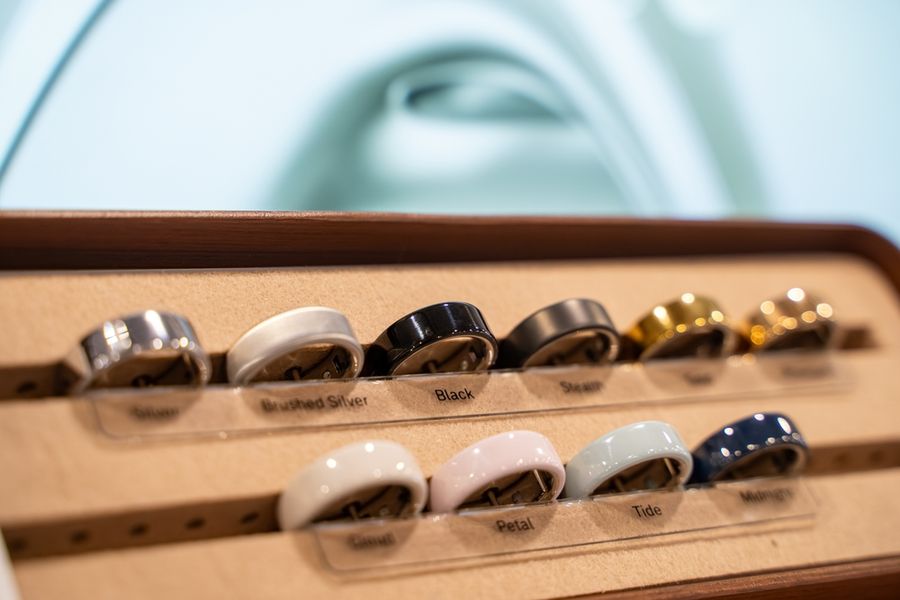
Sleep-tracking rings can collect useful information without putting a screen on the wrist. The newest models measure sleep stages, movement, heart signals, temperature changes, and other overnight details. Their apps then turn those readings into scores and trends that may be easier to review. Still, the best model depends on what the user wants to learn, which phone they own, and how often they are willing to charge the ring.
Oura Ring 5: Best Overall for Detailed Sleep Trends
Oura Ring 5 gives the clearest all-around view of nighttime patterns. Its Sleep Score uses total sleep, heart rate variability, nighttime movement, sleep regularity, and other factors. The app also separates the night into light, deep, and REM sleep. Blood oxygen sensing can flag possible breathing disturbances, while bedtime guidance reminds the user when it may be time to wind down.
The newer ring is 40 percent smaller than Oura Ring 4 and uses a titanium body. Depending on size and use, one charge is rated for six to nine days. That combination matters because a ring cannot identify a pattern when it spends too many nights off the finger. Oura Ring 5 is the strongest choice for people who want several sleep details placed into one simple daily view.
Samsung Galaxy Ring: Best for Galaxy Phone Users
Galaxy Ring measures heart rate and skin temperature, with its health sensors sending information to Samsung Health. The Energy Score combines the previous day’s sleep, heart rate, and activity to give the user a morning view of physical readiness. The app can also place sleep information beside other daily wellness readings.
This model makes the most sense for someone who already uses a Samsung Galaxy phone and wants everything inside the same health system. A registered Samsung account and Galaxy smartphone are required for setup and full data access. Battery life can reach up to 14 days, which makes charging less necessary.
RingConn Gen 3: Best for Long Battery Life
RingConn Gen 3 tracks sleep duration, sleep stages, blood oxygen, respiratory rate, heart rate, heart rate variability, and skin temperature. It also watches for sleep apnea risk signs and records overnight vascular load trends. These readings give users several ways to compare one night with another instead of relying only on one sleep score.
The ring can run for up to 14 days when vibration is turned off, while using vibration lowers the stated range to about 10 to 12 days. It also stores up to 10 days of information offline and does not require a subscription. RingConn Gen 3 is a strong fit for travelers and people who often forget to charge wearable devices.
Ultrahuman Ring PRO: Best for Recovery Context
Ultrahuman Ring PRO uses a Sleep Index to organize sleep duration, resting heart rate, restfulness, and light, deep, and REM sleep. Dynamic Recovery then looks at whether the body appears ready for harder activity or needs more rest. This can help users connect a rough night with the way they feel and perform the following day.
The ring also works with Jade, an app feature that lets users ask questions about their health information and look for longer-term trends. Up to 250 days of information can remain on the ring, while the PRO Charger can hold up to one year of ring data. This model may appeal to people who want sleep information placed within a larger recovery and lifestyle picture.
What Matters Most When Comparing the Rings?
Start with the information that could actually change a habit. A person trying to keep a steady bedtime may value regularity trends and bedtime guidance. Someone dealing with restless nights may care more about movement, sleep stages, or overnight oxygen readings. More measurements are not always better when the app makes them difficult to understand.
Fit is also important. Smart rings contain sensors that can make their sizing different from ordinary jewelry. A loose ring may move during the night, while a tight one can become uncomfortable as fingers swell. Using the brand’s sizing kit before ordering is a sensible step, especially for a device meant to stay on for many hours.
Daily charging habits should also guide the choice. A ring with many useful features will not provide a clear pattern if it is regularly left on the charger overnight. Buyers who dislike frequent charging may prefer RingConn Gen 3 or Ultrahuman Ring PRO, while users who value a simple sleep display may place more weight on Oura’s app.
The Best Ring Depends on the Pattern You Want to See
Oura Ring 5 is the best overall option for most people because it combines sleep stages, regularity, movement, oxygen information, and bedtime guidance in an easy daily summary. Galaxy Ring is the more natural choice for Samsung users. RingConn Gen 3 stands out for battery life and subscription-free tracking, while Ultrahuman Ring PRO gives sleep data more recovery context.
A sleep ring is most useful when treated as a long-term pattern tool rather than a judge of one night. Consistent wear, a comfortable fit, and attention to several weeks of results can make the information more useful than reacting to one unusually good or bad score.